


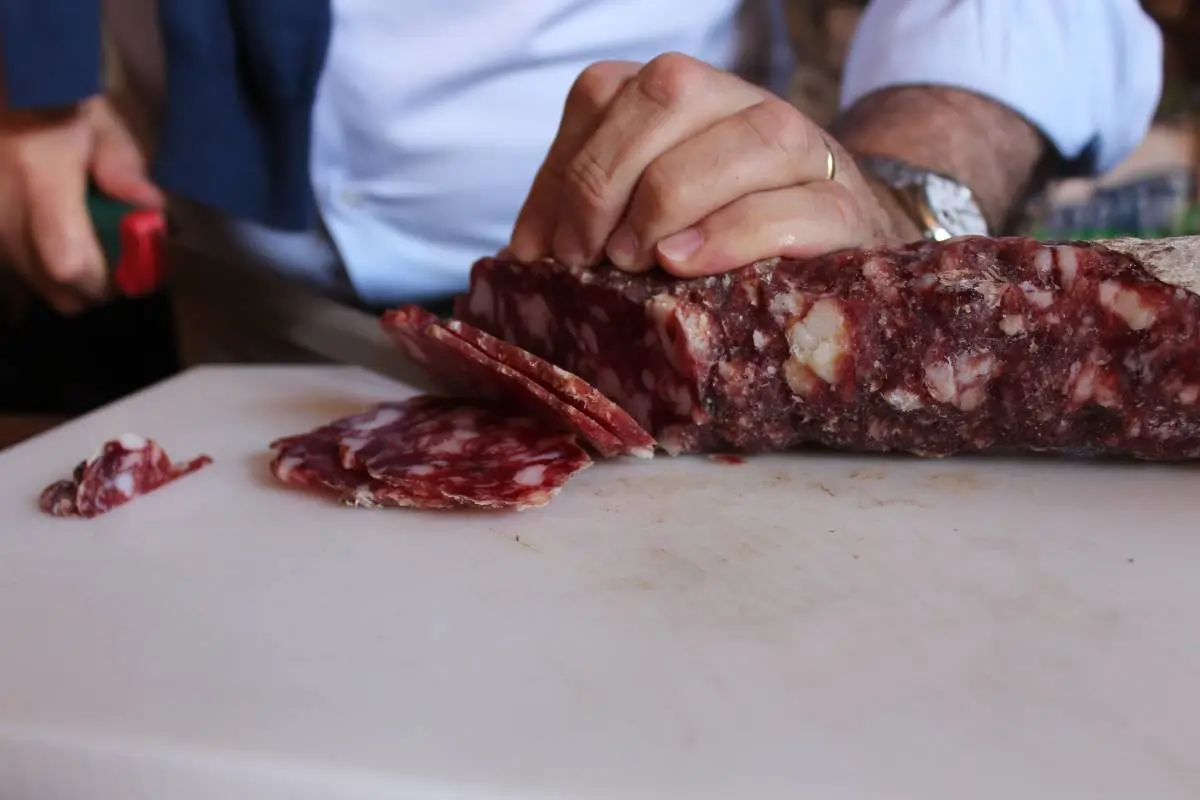
Varzi salami is one of the most representative gastronomic products of the Oltrepò Pavese area and, more broadly, of the Lombardy region. This historic cured meat, now recognised with the Protected Designation of Origin (PDO), represents one of the true excellences of the rural tradition of this territory south of the Po River. Talking about recipes with Varzi salami means telling a piece of local history made of farmhouses, slow ageing in stone cellars and a gastronomic culture that has transformed simple ingredients into products of outstanding quality.
For centuries Varzi salami has accompanied the lives of families in Oltrepò Pavese. The processing of pork meat was in fact one of the most important moments of the agricultural year and required precise knowledge passed down from generation to generation. Today this salami continues to be one of the symbols of the territory, appreciated not only for its balanced flavour but also for its cultural and identity value.
Varzi salami: one of the gastronomic symbols of Oltrepò Pavese
Varzi salami originates in the mountainous part of Oltrepò Pavese, particularly in the Staffora Valley and in the surrounding hilly areas. The cool and ventilated climate of these areas has favoured the natural ageing of cured meats for centuries, making this territory especially suitable for salami production.
The preparation involves the use of different high-quality cuts of pork, carefully minced and stuffed into natural casings. The ageing process takes place slowly in cool and humid cellars, often built of stone, where the salami gradually develops its aromas. The result is a product with a soft texture and balanced flavour, capable of expressing delicate aromatic notes without becoming excessively salty.
Today Varzi PDO salami is one of the best-known products of Oltrepò Pavese and is often considered the true “king of the table” in this territory. It is therefore no surprise that many traditional local recipes feature it as the main ingredient, enhancing its flavour through simple yet effective combinations.
Bread and salami: the oldest and most authentic recipe
Among all the recipes with Varzi salami, the simplest is probably also the oldest. Bread and salami represents one of the most traditional gastronomic pairings not only in Oltrepò Pavese but in the entire Italian rural culture.
For centuries this combination accompanied the daily life of farmers and field workers. A piece of rustic bread and a few slices of salami cut with a knife were enough to create a nourishing and flavourful meal. No elaborate preparation or complex ingredients were needed: the quality of the raw materials alone created the perfect balance between the fragrance of the bread and the intensity of the cured meat.
Even today, bread and salami remains one of the best ways to enjoy Varzi salami. Bread, especially when wood-fired or made with traditional flours, complements the salami without covering its flavour, allowing its aromatic characteristics to be fully appreciated.
Varzi salami and polenta: a classic of rural cuisine
Among the recipes with Varzi salami belonging to the culinary tradition of Oltrepò Pavese, the pairing with polenta cannot be missing. Polenta was for centuries one of the main foods of Lombard farming families and represented an everyday dish in the farmhouses scattered across the hills south of the Po.
Served hot and freshly prepared, polenta pairs perfectly with Varzi salami thanks to the contrast between the sweetness of corn flour and the savoury taste of the aged meat. On many traditional tables the salami was simply served alongside polenta, while in other preparations it was lightly warmed or accompanied by rustic sauces.
This dish perfectly tells the story of traditional cuisine: few ingredients, substantial nourishment and a deep connection with the land.
Varzi salami on pizza: a more modern interpretation
In recent years Varzi salami has also entered more contemporary preparations, proving its great versatility in the kitchen. Among these is pizza, where this cured meat is used as a quality ingredient to enrich gourmet recipes.
Varzi salami on pizza pairs particularly well with simple ingredients such as mozzarella, mushrooms or delicate cheeses. Its balanced flavour allows it to add character to the pizza without overwhelming the other ingredients, maintaining an interesting gastronomic harmony.
This version represents an example of how traditional products can be reinterpreted within modern cuisine while still enhancing the excellence of the territory.
The best way to enjoy Varzi salami
Despite the many recipes with Varzi salami that can be found in both traditional and contemporary cuisine, many enthusiasts agree on one fundamental point: the best way to enjoy it remains the simplest.
Cut by hand with a knife and served on its own, Varzi salami allows all its characteristics to be fully appreciated. Its soft texture, delicate aroma and balanced flavour emerge with greater intensity when the salami is not accompanied by too many ingredients.
For this reason it is often served as an appetiser, perhaps accompanied only by rustic bread and a good wine from Oltrepò Pavese such as Bonarda, Barbera or Buttafuoco. In this way the salami becomes the true protagonist of the table and tells the full story of the gastronomic tradition of this territory.
Recipes with Varzi salami: a heritage of Oltrepò Pavese cuisine
Recipes with Varzi salami represent an important part of the culinary culture of Oltrepò Pavese. From the simplicity of bread and salami to more modern preparations such as pizza, this cured meat continues to be a protagonist of the table and a symbol of a gastronomic tradition rooted in the life of rural farmhouses.
Anyone visiting Oltrepò Pavese quickly discovers that Varzi salami is not just a food product but a true cultural heritage. Behind every slice lies centuries of history, artisanal work and knowledge passed down over time.
Tasting Varzi salami therefore means experiencing something authentic and discovering one of the most distinctive flavours of this territory — a taste that continues to tell the truest soul of Oltrepò Pavese.


