

Have you ever wondered if there’s a place where the seasons speak through the silence of the woods, where the aromas of the kitchen tell ancient stories, and where every stone holds a legend? Romagnese is one of those villages that doesn’t reveal itself immediately but slowly wins you over, respectfully. Nestled in the valleys of the Lombard Apennines, it’s a destination that invites you to slow down, to listen, to explore with all your senses. This guide will take you on a 360° journey through history, nature, flavors, and culture. Because Romagnese isn’t just a place to visit—it’s a place to live, to listen to, to breathe.
The Historical Roots of a Mountain Village
Romagnese’s roots go deep, with a past that speaks Latin: the ancient name “Romanise” suggests a Roman origin. In the Middle Ages, the village was closely tied to Bobbio, first falling under the Monastery of San Colombano in the 10th century, and later under the Bobbio diocese. In 1387, power shifted when the Dal Verme family arrived and built a castle. In 1485, after the poisoning of Pietro Dal Verme, the fief was transferred to the Counts of Ligny by order of Ludovico il Moro. Only in 1925, following a popular referendum, did Romagnese return to the Province of Pavia. Today, that past lives on in the stone walls, the stories of the elders, and the documents carefully preserved at the heart of the village.
Castles, Churches, and Places of Memory
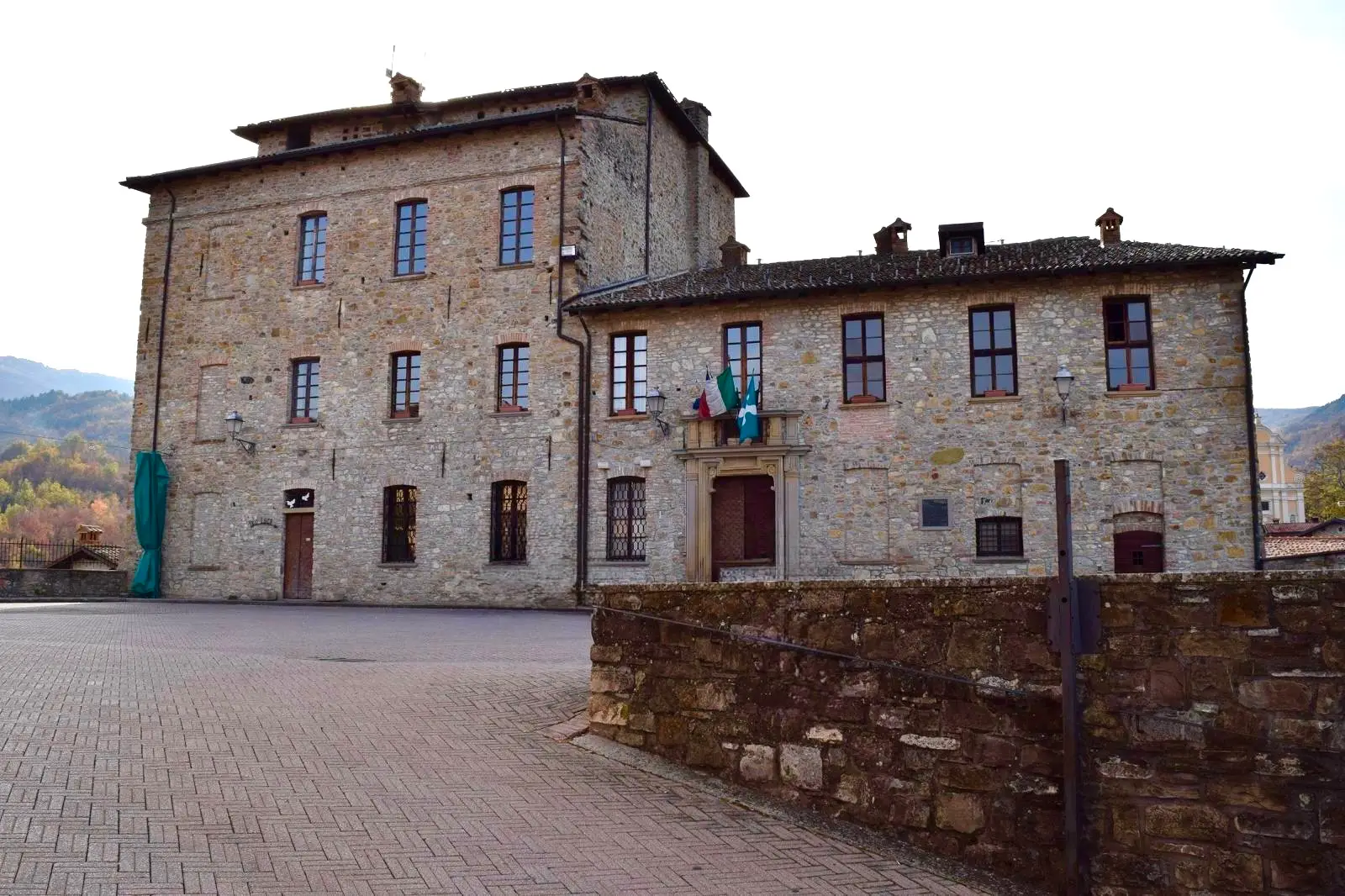
Wandering through its narrow streets, you’ll come across places that seem suspended in time. The Castle of Romagnese, imposing and austere, is more than just a defensive structure—it’s a symbol of the village’s collective memory. It houses the Lombard Apennine Museum, a multisensory journey through the history of the “Four Provinces” region. Just steps away, the Church of San Lorenzo Martire stands out with its simplicity and sacred charm. Further on, the Oratory of the Dead of San Lorenzo, nestled in the woods, is an 18th-century architectural gem—ideal for those seeking silence, reflection, and beauty.
Authentic Flavors: From Focaccia to Cakes and Cured Meats
In Romagnese, food is a way of expressing identity. Brusadèla, once used to test the temperature of wood-fired ovens, is now a beloved delicacy celebrated with an annual festival that smells of home. The Torta Sabiosa, crumbly and delicate, is more than just a dessert: it’s a legacy passed down through generations—a cake that feels like a warm embrace. And let’s not forget the renowned Salame di Varzi DOP, also produced in Romagnese, which embodies the excellence of Oltrepò’s charcuterie tradition. Every flavor, every bite, is a fragment of living memory.
Nature and Landscapes: Beech Forests and Botanical Gardens
Romagnese is a paradise for nature lovers in all its shades. The Romagnese Ring Trail, a 30 km hiking loop, winds through centuries-old beech forests, hidden streams, and panoramic viewpoints overlooking the Staffora and Tidone Valleys. At 950 meters above sea level, the Pietra Corva Botanical Garden is a constant surprise, home to alpine, rare, and exotic plants living in perfect harmony. The village is also part of the “Il Grano in Erba” Ecomuseum, a project that blends rural culture, environmental education, and the preservation of the Alto Oltrepò’s agricultural landscapes.
Museums, Events, and Village Life
At the heart of the village, the Lombard Apennine Museum of the Four Provinces passionately tells the story of daily life in the past: tools, garments, musical instruments, and oral testimonies give voice to an identity that withstands time. But Romagnese is also about celebration, with events throughout the year that strengthen the community spirit. The Notte Bianca lights up the streets with music and culture; the Sagra della Brusadèla brings everyone back around the oven; and the magical Natale in Piasa Castè transforms Christmas Eve into a fairytale filled with lights, mulled wine, and folk songs. Each event is a chance to experience the village, to feel part of something genuine.
Conclusion
Romagnese is an invitation to slow discovery. It’s the kind of village you visit for a hike and stay for the warmth of its people. Where a slice of focaccia tells stories of grandmothers and wood-fired ovens, and a forest trail speaks more than a thousand words. Visiting Romagnese isn’t about ticking off a destination—it’s about letting yourself be touched. It’s a place that doesn’t shout its beauty but whispers it gently, among the beech trees and ancient stones, between a bite of sabiosa and a window overlooking infinity.
Because once you’ve discovered Romagnese, it stays with you.


